We recommend prioritizing a flashlight, a tire-pressure gauge, jumper cables, and tire-changing equipment if your vehicle carries a spare. Some vehicles have a tire repair kit instead of a spare, so check what came with yours before buying tools. Keep your owner’s manual accessible for equipment requirements, recommended tire pressure, jump-start procedures, and approved lifting points.
Match your tools to your vehicle
Start with a flashlight, tire-pressure gauge, and jumper cables. If your vehicle carries a spare, confirm that its jack and lug wrench fit and that you know the approved lifting points. Some vehicles have a tire repair kit instead of a spare.
Flashlight: Test the batteries regularly.
Tire-pressure gauge: Find the recommended pressure in your vehicle manual.
Jumper cables: Review your vehicle’s jump-start procedure before you need it.
Spare tire: Check its condition and pressure as recommended in your manual.
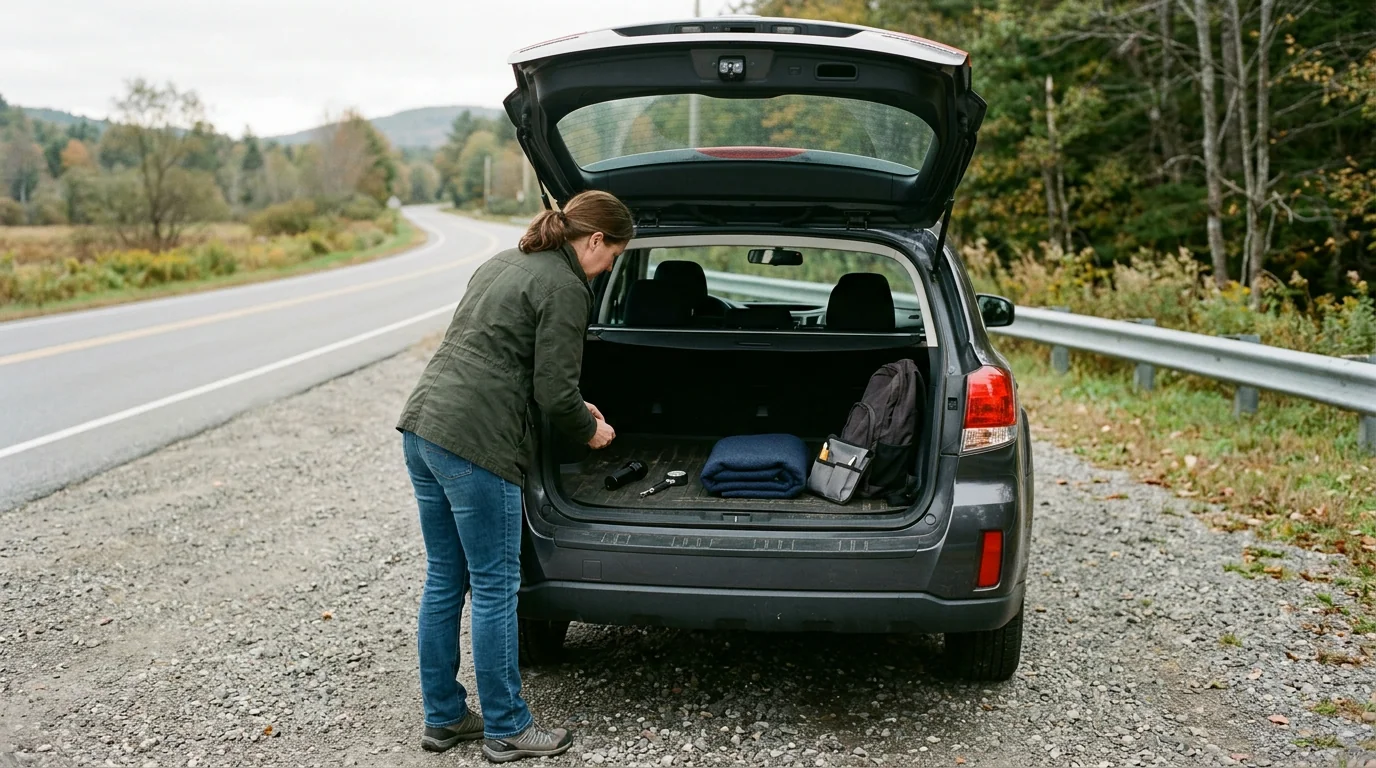
Keep tools accessible and secure loose items so they cannot shift while you drive.
Featured in this guide
Basic Tools to Keep in Your Car: Essential eBook Guide for Roadside Safety and Preparedness
Keep a first-aid kit, water, a blanket, a compatible phone charger, and weather-appropriate clothing in your car. Adjust supplies for the length of your trip and the needs of children, other passengers, and pets. Pack warm layers before cold weather arrives.
Keep emergency contacts and roadside assistance information accessible; a written copy can help if your phone is unavailable. Carry a reflective vest and warning devices where permitted, but place warning devices only if you can do so safely.
Review your kit periodically and after using it. Replace depleted or expired first-aid supplies, refresh water, and test your flashlight. If you want a separate way to keep track of dates, our Expiry and PAO Tracker is another option to explore; it does not replace checking the supplies themselves.
Know when to call for help
If trouble develops, move to a safe location away from traffic when possible and turn on your hazard lights. Avoid working beside fast-moving vehicles. A tire change can be dangerous on a narrow shoulder, in poor visibility, or during severe weather.
Call emergency services if there is immediate danger. For a breakdown beyond your skills or equipment, contact roadside assistance and explain your location and situation. Never attempt a tire change or jump-start when conditions make it unsafe.
Check the product’s listed specifications when evaluating know when to call for help.
Plan your next kit review
Our eBook offers a starting point for your roadside preparedness routine. Use it to support your planning, then rely on your owner’s manual for the procedures and equipment specific to your vehicle.
View the eBook as you consider what to carry and what you would rather leave to a professional.
Before choosing, compare the product details with your daily routine, available space, care needs, and preferred setup. The strongest option is usually the one that fits the intended use clearly and remains simple to clean, store, and check before repeat use.
It is also worth checking measurements, material notes, included parts, and compatibility details so the item matches the way it will be used after delivery.
Before choosing, compare the product details with your daily routine, available space, care needs, and preferred setup. The strongest option is usually the one that fits the intended use clearly and remains simple to clean, store, and check before repeat use.
FAQ
What are the essential tools that every car owner should have?
A flashlight, tire-pressure gauge, and jumper cables are useful starting points, along with a compatible jack and lug wrench when the vehicle has a spare. Learn the safe procedures in your owner’s manual before you need them.
What are some essential items to keep in my car for an emergency?
Keep a first-aid kit, water, a blanket, a phone charger, reflective gear, and accessible roadside assistance contacts. Add clothing and other supplies suited to your weather and passengers.
See if Basic Tools to Keep in Your Car: Essential eBook Guide for Roadside Safety and Preparedness fits your setup









Leave a comment