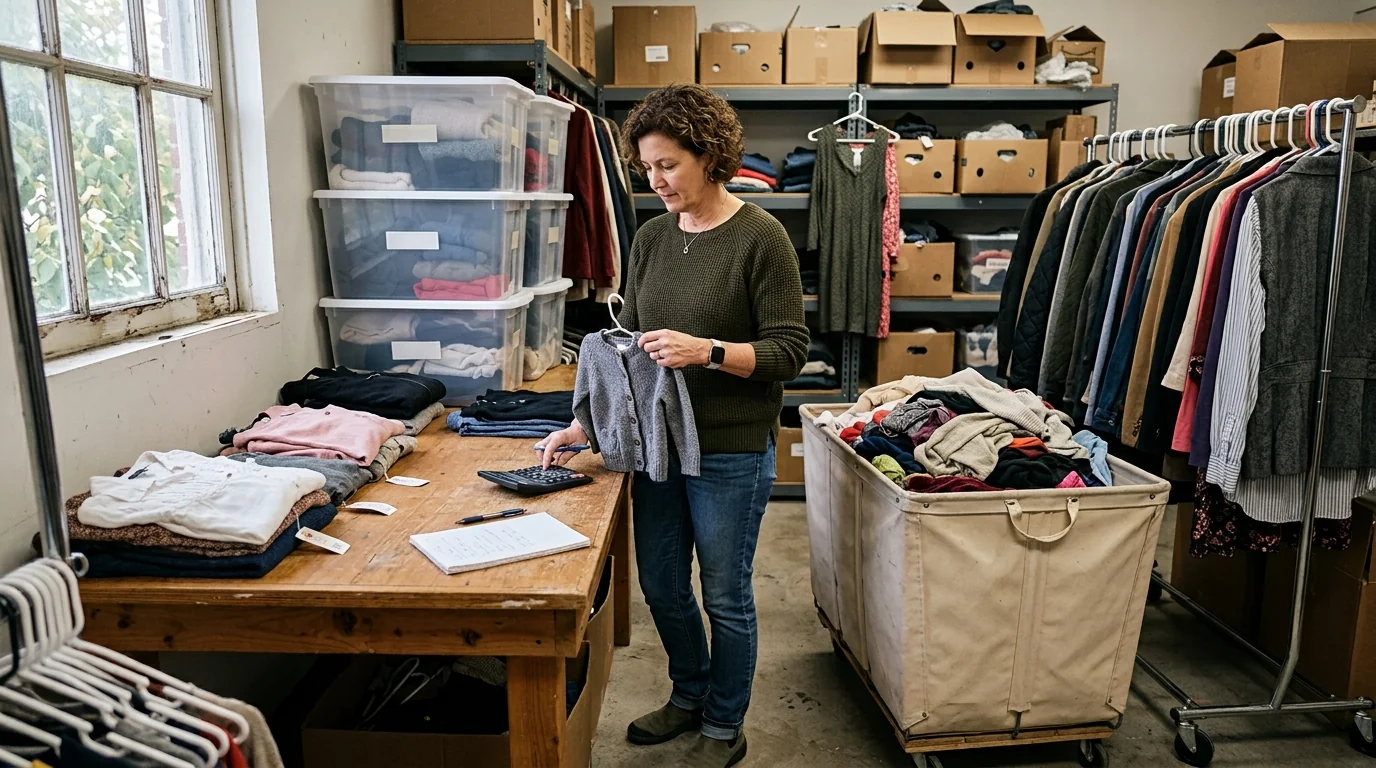
The price on a donation receipt or at a sourcing sale is only the beginning. Add the time spent sorting, laundering, repairing, measuring, photographing, and pricing each piece before deciding whether its resale price leaves enough room for profit.
Our team favors items that are clean, functional, and ready to sell with minimal work. Set a maximum purchase price for each category, then pass on pieces that need repairs you cannot price confidently.
Featured in this guide
Thrift Like a Pro: Hidden Fashion Treasures | Ultimate Thrifting Guide eBook | How to Shop Thrift Stores Like a Pro for Stylish Finds
Recognizable styles, useful basics, and well-made garments can bring shoppers back when they are in good condition and priced for your market. Fabric, construction, and wear matter more than a label alone: inspect seams, closures, stains, and high-friction areas before an item reaches the rack.
For a closer look at choosing secondhand clothes you will actually use, read our guide to thrifting like a pro. Apply that same selectivity to your store so customers can shop without digging through avoidable damage.
Price for turnover, not just margin
A high asking price means little if an item sits for months. Track what sells, its selling price, and how long it takes to move; those figures can guide both your next purchase and your markdown schedule.
Group similar items by condition, material, and demand rather than giving every piece in a category one price. Make prices easy to see so you can reduce friction at the rack and at checkout.
Protect cash flow as you grow
A profitable month is not the same as a sustainable store. Rent and payroll continue even when sales slow, so keep enough cash available for recurring bills and avoid tying too much of it up in unsold stock.
Start with a manageable inventory mix and review expenses alongside sales each month. If a category consistently requires heavy cleaning or steep markdowns, buy less of it and put that budget toward faster-selling pieces.
FAQ
How much does a thrift store owner make?
There is no fixed owner salary. What you can pay yourself depends on sales after inventory, operating expenses, taxes, and money reserved for the business are accounted for.
Is owning a thrift store worth it?
It can be worth it if you enjoy sourcing and serving customers and the numbers support the time you invest. Build a budget that includes your own labor before committing to a lease or large inventory purchase.
What is the most profitable store to open?
No store format is reliably the most profitable everywhere. Compare startup costs, ongoing expenses, local demand, and expected sales before choosing a business model.
Can owning a thrift store be profitable?
Yes, it can be profitable when revenue consistently exceeds the full cost of acquiring and selling inventory. Careful buying, clear pricing, and control of fixed expenses all contribute to that result.
See if Thrift Like a Pro: Hidden Fashion Treasures | Ultimate Thrifting Guide eBook | How to Shop Thrift Stores Like a Pro for Stylish Finds fits your setup











Leave a comment