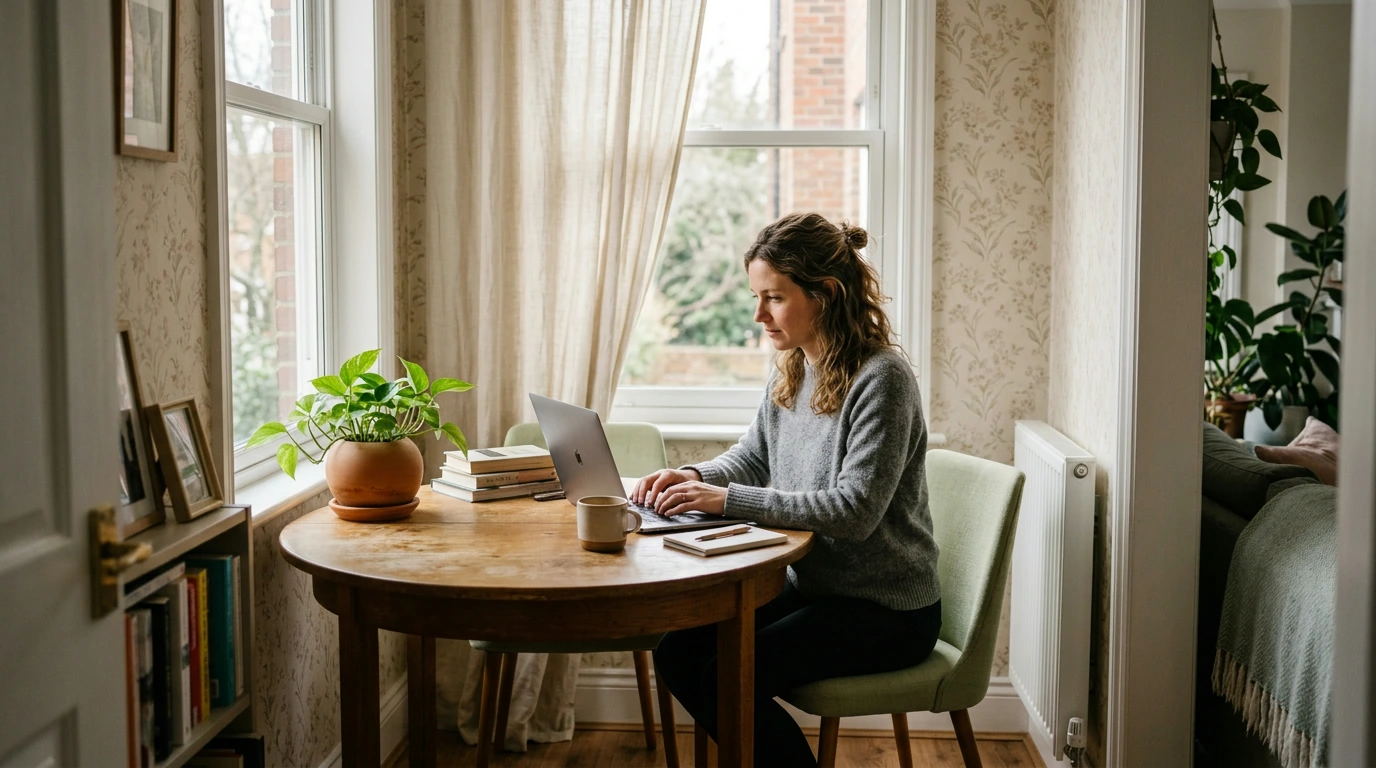
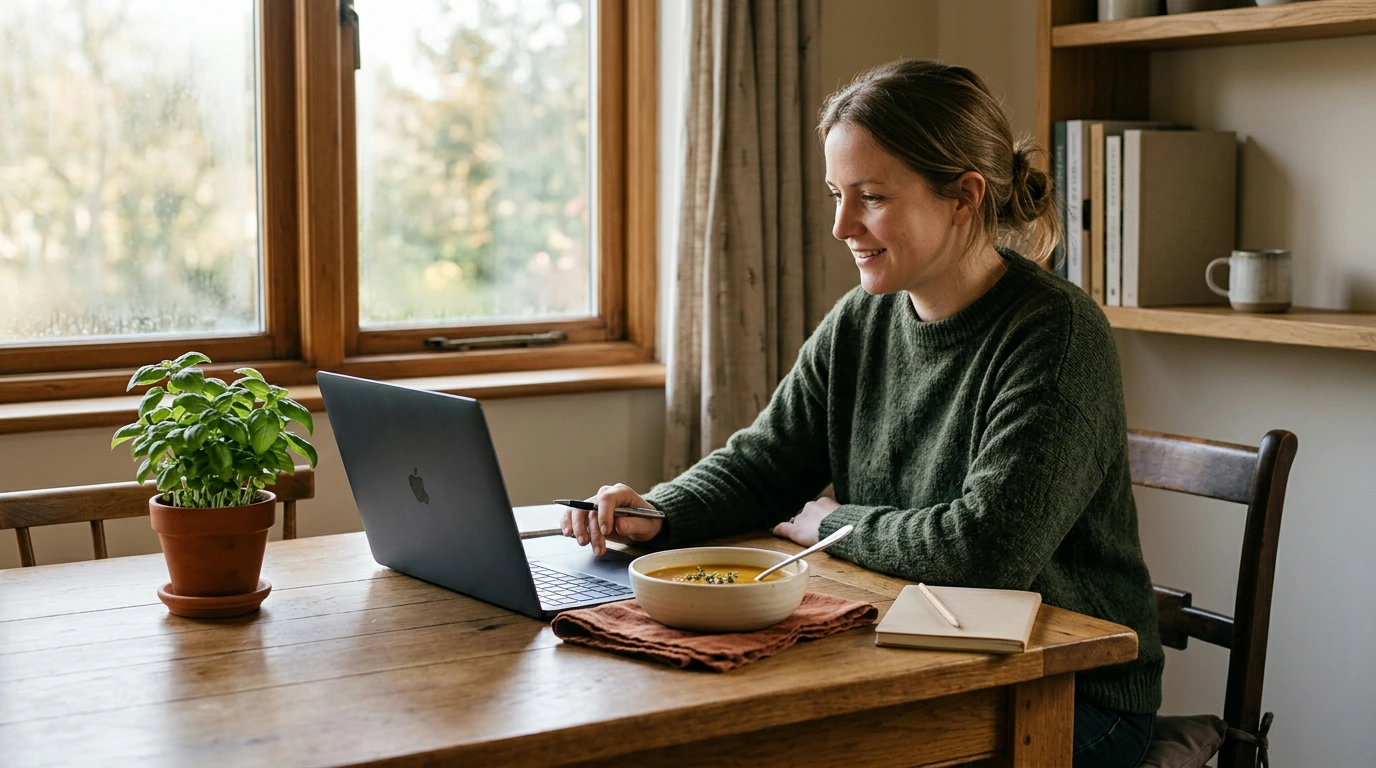
A dining table is a practical choice if you need room to spread out papers or use a larger monitor, but it works best when you can clear it at the end of the day. Keep your daily essentials in a portable bin or drawer so you can set up quickly without letting work take over the room.
A small desk or wall-mounted work surface can give you a more consistent workspace without requiring a separate room. Choose a spot with enough clearance for your chair and cords, and use vertical storage to keep supplies within reach rather than crowding the desktop.
Good lighting matters in a corner that doesn’t get much daylight, especially if you read or write on paper. Place a task lamp where it lights your work without shining directly into your eyes or creating glare on your screen.
Featured in this guide
Your Ultimate Home Office Guide | Digital Download | How to Organize a Home Office for Productivity, Focus & Style | Printable eBook & Workspace Setup Planner
A library, coworking space, or other suitable quiet location can be an alternative when home is too noisy or crowded for focused work. Compare travel time, available outlets, call policies, and any costs before making it part of your routine.
You can also split your week between locations: use a portable setup for focused tasks elsewhere and handle shorter tasks at home. Our team recommends choosing the arrangement you can use consistently, rather than trying to recreate a full office in a space that needs to serve other purposes.
A dedicated corner, a dining table that you clear after work, or a portable workstation can replace a separate office room. If working at home isn’t practical, a library or coworking space may be a better fit, depending on your need for calls and quiet.
See if Your Ultimate Home Office Guide | Digital Download | How to Organize a Home Office for Productivity, Focus & Style | Printable eBook & Workspace Setup Planner fits your setup









Leave a comment