20% off on product page · save $1.25
How to Trust Your Decisions: A Practical Self-Trust Guide

Start with a decision small enough to practice
Choose something with room for trial and error: what to make for dinner, whether to accept a weekend invitation, or how to word a simple boundary. Small decisions give you a chance to notice your priorities and act on them. Save choices with major financial, medical, or relationship consequences for a slower process that may include qualified advice.
Write down the decision in one sentence, list your realistic options, and set a time to choose. “I’ll decide about Saturday’s plans by Thursday evening” gives an ordinary decision an endpoint. You can still gather useful information before then; the deadline simply helps you notice when you’re circling the same thoughts.
As you practice, aim for a thoughtful choice, not certainty. You cannot predict every outcome, and an imperfect result does not automatically mean your judgment was poor. Self-trust includes believing you can handle a change of plans.
Choose without waiting for certainty
Ask yourself: What matters most? What do I know? What am I assuming? Which option can I live with, even if it is imperfect? If you need a specific fact, find it. If you already have enough information, choose a reasonable next step and a time to act.
Advice is useful when someone brings relevant expertise or a perspective you missed. But if asking one more person only delays the choice, you can thank them for their input and decide for yourself.
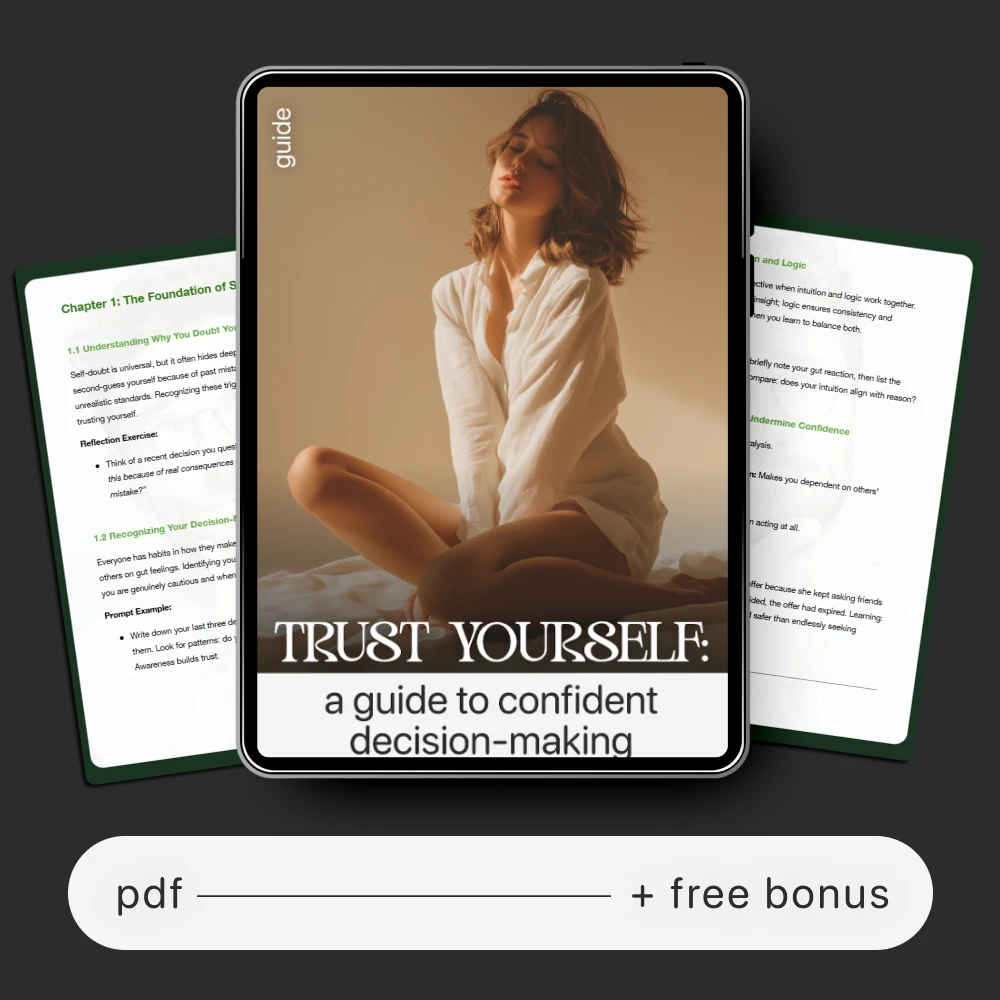
Trust Yourself: A Guide to Confident Decision-Making | How to Trust My Own Decisions Digital Guide | Personal Growth, Self-Trust Workbook, Mindset PDF Download
View product
Reflect after you act
Keep a brief decision log: what you chose, why it made sense at the time, and what happened next. An unexpected outcome does not automatically mean your judgment was poor. Ask what you learned and what you might adjust next time.
If persistent self-doubt or low self-esteem affects your daily life, consider support from a mental health professional. A decision exercise is practice, not a substitute for care.
Check the listed dimensions for reflect after you act against the available vehicle space before use.
Give your practice a place to land
It is a digital guide focused on confident decision-making and self-trust. Our team sees it as an optional companion, not a requirement for making progress.
You may also find it helpful to keep the facts behind a decision in one place. For a specific kind of everyday tracking, our Expiry and PAO Tracker is another available product. It serves a different purpose from the self-trust guide; the decision check-in above works without either purchase.
Choose one manageable decision today. Name it, check your priorities and facts, and decide when you will act. Tomorrow, take a moment to notice what the experience taught you—even if the lesson is simply that you can make a choice and carry on.
Before choosing, compare the product details with your daily routine, available space, care needs, and preferred setup. The strongest option is usually the one that fits the intended use clearly and remains simple to clean, store, and check before repeat use.
It is also worth checking measurements, material notes, included parts, and compatibility details so the item matches the way it will be used after delivery.
Before choosing, compare the product details with your daily routine, available space, care needs, and preferred setup. The strongest option is usually the one that fits the intended use clearly and remains simple to clean, store, and check before repeat use.
FAQ
What are some signs that a woman might have low self-esteem?
Possible signs include frequent harsh self-talk, difficulty accepting compliments, or regularly dismissing her own needs and accomplishments. These experiences are not limited to women, and no single sign tells you everything about a person’s self-esteem.
What are the 5 C’s of confidence?
There is no single universally accepted set of “5 C’s” of confidence; different authors use the phrase for different frameworks. You do not need a particular framework to begin: choose a manageable action, consider your priorities, and learn from the result.
How to improve self-esteem?
Notice harsh self-talk, recognize strengths you tend to overlook, and set achievable goals that let you acknowledge your efforts. If low self-esteem persistently affects daily life, consider seeking support from a mental health professional.
See if Trust Yourself: A Guide to Confident Decision-Making | How to Trust My Own Decisions Digital Guide | Personal Growth, Self-Trust Workbook, Mindset PDF Download fits your setup
View product










Leave a comment