Style Smart Home Accessories Without the Clutter
Start with the room, not the devices
Before moving a speaker or buying another vase, identify what the room is for. In a living room, that might be conversation and relaxing; in an entryway, it’s getting out the door without hunting for your keys. Notice the existing focal point, whether it’s a window, artwork, or fireplace, and take stock of the colors already doing most of the work.
Choose a few accessories that fit the scale and purpose of the space. A broad console may support a lamp and a substantial object, while a narrow shelf may need just one small accent. Leave some surface visible so each choice has room to register. Treat connected devices as part of that composition, not as mistakes to disguise. You can soften their appearance with nearby objects, but keep controls easy to use, microphones unobstructed, and ventilation clear.
Give each surface a clear job
On a coffee table, leave room for a drink. At an entry console, give keys a dependable landing spot. Beside your bed, keep your lamp, phone, and frequently used controls easy to reach. Once those essentials fit, add contrast with height, shape, or texture rather than filling every gap.
Our team uses a simple sequence: place the essentials first, add one accent that suits the surface, then remove anything that gets in the way. A tray can gather small items; a larger object may bring more calm than several undersized ones.
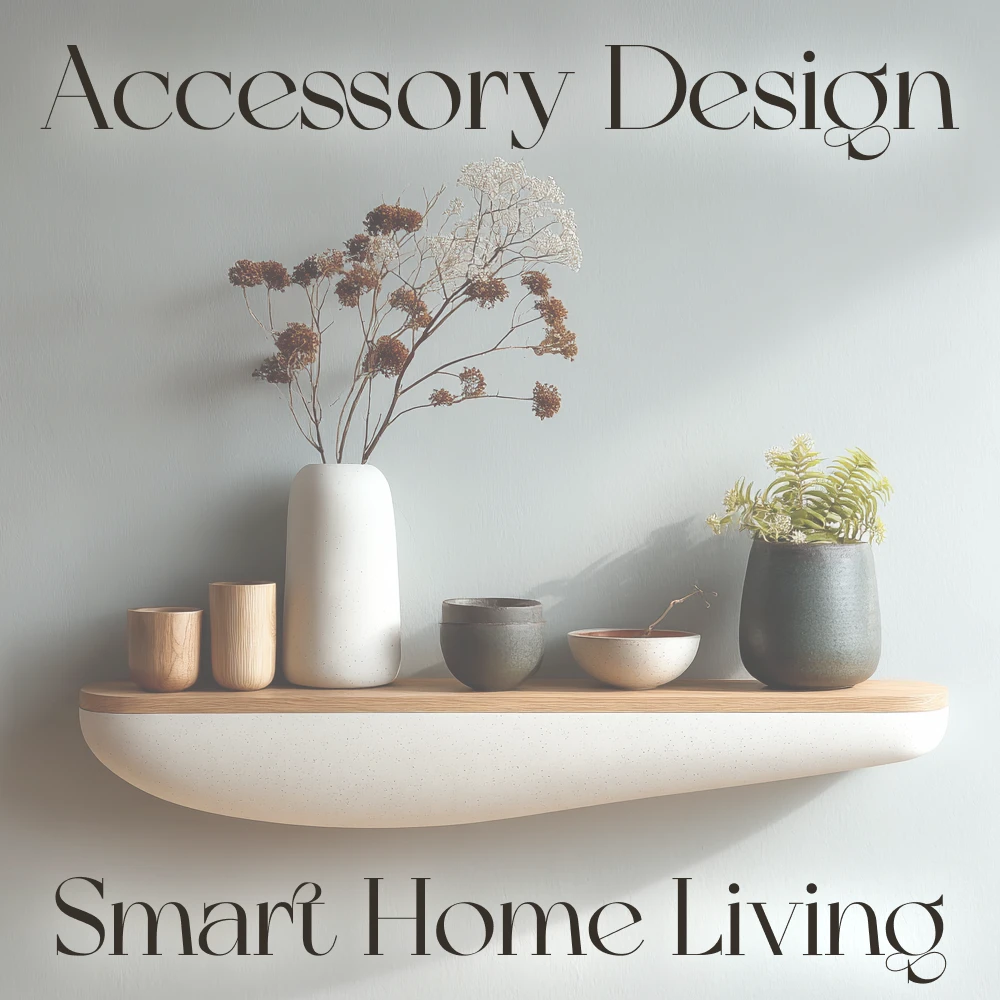
Accessory Design for Smart Home Living | Modern Home Styling eBook | How to Style Accessories for Maximum Impact | Digital Interior Design Guide for Connected Spaces
View product
Reduce clutter without compromising safety
Cords and small accessories can make a surface feel busier than the device itself. Route cables along the back of furniture or use an appropriate cable organizer instead of letting them cross a tabletop. Keep plugs accessible, and never cover vents or enclose a device that needs airflow.
Repeat a material or finish to help practical and decorative pieces sit together: a wood tray can relate to a nearby frame, for example. Edit what you already own before adding something new. If your reset includes a bathroom counter, our Expiry and PAO Tracker can help you organize product dates as you decide what deserves space.
Decide whether a styling guide fits your project
If you already know which devices you use but want help making the surrounding accessories feel more intentional, our digital Accessory Design for Smart Home Living eBook is an option to explore. Start with one room and the surfaces you use most; you don’t need to replace everything to make a more considered arrangement.
Build a styling routine that changes with you
Work room by room. Clear one surface, put back its practical essentials, and arrange a few accents around them. Then live with it for a day: can you reach the controls, set down what you carry, and use chargers without shifting the decor? Adjust what gets in the way.
Small seasonal swaps—a different textile, branch, or framed print—can refresh the look without starting over. If you want more direction as you style around connected devices, explore our digital Accessory Design for Smart Home Living eBook. And when you’re planning the devices themselves, ENERGY STAR’s smart home energy management guidance offers a useful perspective on their practical role. Good styling makes room for both how your home looks and how it works.
Before choosing, compare the product details with your daily routine, available space, care needs, and preferred setup. The strongest option is usually the one that fits the intended use clearly and remains simple to clean, store, and check before repeat use.
FAQ
Who are the top 10 accessory designers?
There isn’t one definitive top-10 list for home accessory designers. For your space, look for pieces whose scale, materials, and usefulness suit the room rather than choosing by a ranking alone.
What are the accessory trends for 2026?
Rather than following a single trend, you can make connected spaces feel current with tactile materials, fewer well-scaled accents, and storage that supports daily use. Choose what works with your room before adding anything new.
What is a smart design?
In a connected home, smart design balances appearance, comfort, and usability. The room looks considered while its devices remain convenient to operate.
See if Accessory Design for Smart Home Living | Modern Home Styling eBook | How to Style Accessories for Maximum Impact | Digital Interior Design Guide for Connected Spaces fits your setup
View product











Leave a comment