A Checklist for Organizing Tiny Spaces: Practical Tips
Start With One Small Space
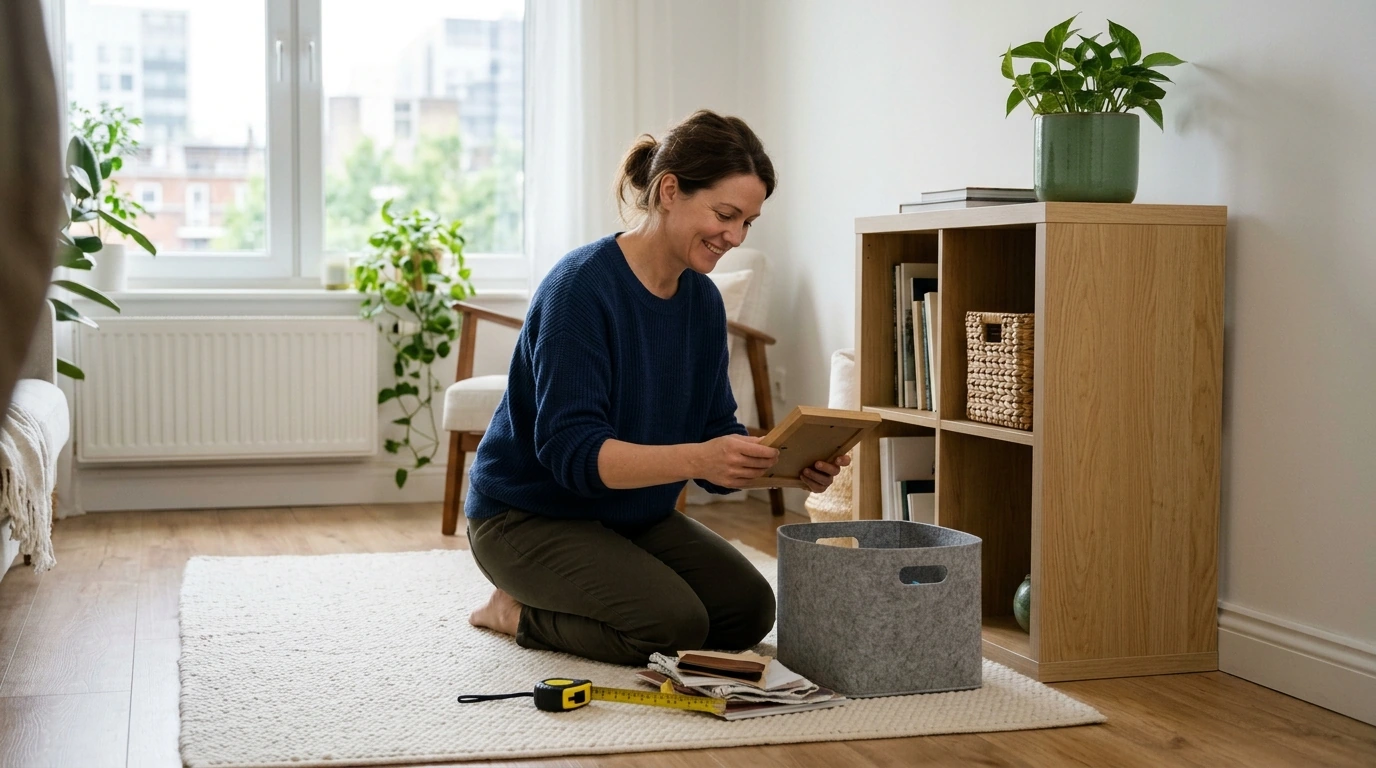
Choose an area you can reasonably finish in one session. A kitchen drawer, an entryway shelf, or a bathroom counter is often easier to assess than an entire room. Clear a nearby surface so you have space to sort without creating an obstacle in a walkway.
Take everything out of the chosen spot and separate it into four groups:
- Keep: Items you use or value and have room to store.
- Relocate: Items that belong elsewhere in your home.
- Donate: Usable items you no longer need that a local organization accepts.
- Discard: Items that can’t be used or donated.
Before throwing away electronics or other potentially hazardous items, check local disposal guidance. The U.S. Environmental Protection Agency’s electronics donation and recycling guide is a useful starting point.
Once you’ve sorted, return the keep group to the space. Move the other groups to their destinations as soon as practical, so a finished drawer doesn’t become a pile on the floor. Use the checklist to stay focused on that one area before choosing another.
Measure Before You Buy Storage
Keep everyday items near where you use them and at a comfortable height. Occasional-use belongings can go farther back in a closet or under a bed, provided you can retrieve them safely.
Try a tray or bin you already own before buying more containers. Measure the shelf, drawer, or under-bed clearance, including space for handles and doors to move. Leave room to reach stored items and keep walkways clear.
A Checklist for Organizing Tiny Spaces | Printable Home Organization Guide, Minimalist Decluttering Planner, Small Apartment Storage Ideas, Digital Download
View product
Choose a Storage Approach for Each Area
- Entryway: Collect keys and accessories in a small tray or on wall hooks.
- Kitchen: Group similar items and use accessible vertical shelf space.
- Bedroom: Store occasional-use items under the bed if there’s enough clearance.
- Bathroom: Keep daily essentials together in a small container.
Avoid stacking belongings so high that they’re difficult to reach. Keep exits and pathways clear when deciding where things belong.
Build a Routine With the Checklist
Our A Checklist for Organizing Tiny Spaces is a printable digital download for working through small areas. Choose one spot for each session, then revisit it later to see whether your storage choices still work.
For a separate record of product dates, you can also explore our Expiry and PAO Tracker. It may be useful if keeping track of expiration and period-after-opening information is part of maintaining your bathroom or personal-care storage.
Keep Your Space Manageable
Make returning things easy: put keys in their tray and toiletries back in their container after use. When clutter builds, take a few minutes to return stray items and decide where anything without a home belongs.
If an object repeatedly ends up elsewhere, its assigned spot may be inconvenient. Adjust your setup as your habits change.
Before choosing, compare the product details with your daily routine, available space, care needs, and preferred setup. The strongest option is usually the one that fits the intended use clearly and remains simple to clean, store, and check before repeat use.
It is also worth checking measurements, material notes, included parts, and compatibility details so the item matches the way it will be used after delivery.
FAQ
Is there a free printable declutter list available?
Free printable lists may be available elsewhere. Our A Checklist for Organizing Tiny Spaces is a paid digital download priced at $2.99.
What is the 50% rule for clutter?
Versions of the rule suggest reducing your belongings by half. It’s an optional guideline, not a requirement; focus instead on what you use, value, and have space to keep.
What is the 2 foot rule in organizing a house?
The phrase can refer to different organizing practices, so there is no single universal rule to follow. Use it as a reminder to consider access and clearance, rather than as a fixed measurement for every space.
See if A Checklist for Organizing Tiny Spaces | Printable Home Organization Guide, Minimalist Decluttering Planner, Small Apartment Storage Ideas, Digital Download fits your setup
View product









Leave a comment