HomeBlogBlogHome Office Tax Deduction: Requirements and Rules

Home Office Tax Deduction: Requirements and Rules

Home Office Tax Deduction: Requirements and Rules

15% off on product page · save $1.94

Home Office Tax Deduction: Requirements and Rules

Nathan Brown · 6 min

Home Office Tax Deduction: Requirements and Rules

Who can claim a home office?

You generally can claim the federal home office deduction if you are self-employed and use part of your home regularly and exclusively for business, whether you own or rent the property. Most employees cannot claim unreimbursed home office expenses on their federal returns, although certain special categories of workers may qualify under different rules, and state tax treatment can differ.

Exclusive use means the area is used only for business, so a desk in a room where your family also watches television generally does not qualify; the space does not have to be a separate room. Limited exceptions to exclusive use apply to certain daycare facilities and to space used regularly to store inventory or product samples, provided the applicable IRS requirements are met.

Home Office Tax Deduction: Requirements and Rules

How must you use the space?

Your home office generally must be your principal place of business, a place where you regularly meet patients, clients, or customers in the normal course of business, or a separate structure used regularly and exclusively for business. An office can qualify as your principal place of business when you use it for administrative or management activities and have no other fixed location where you conduct substantial administrative or management activities.

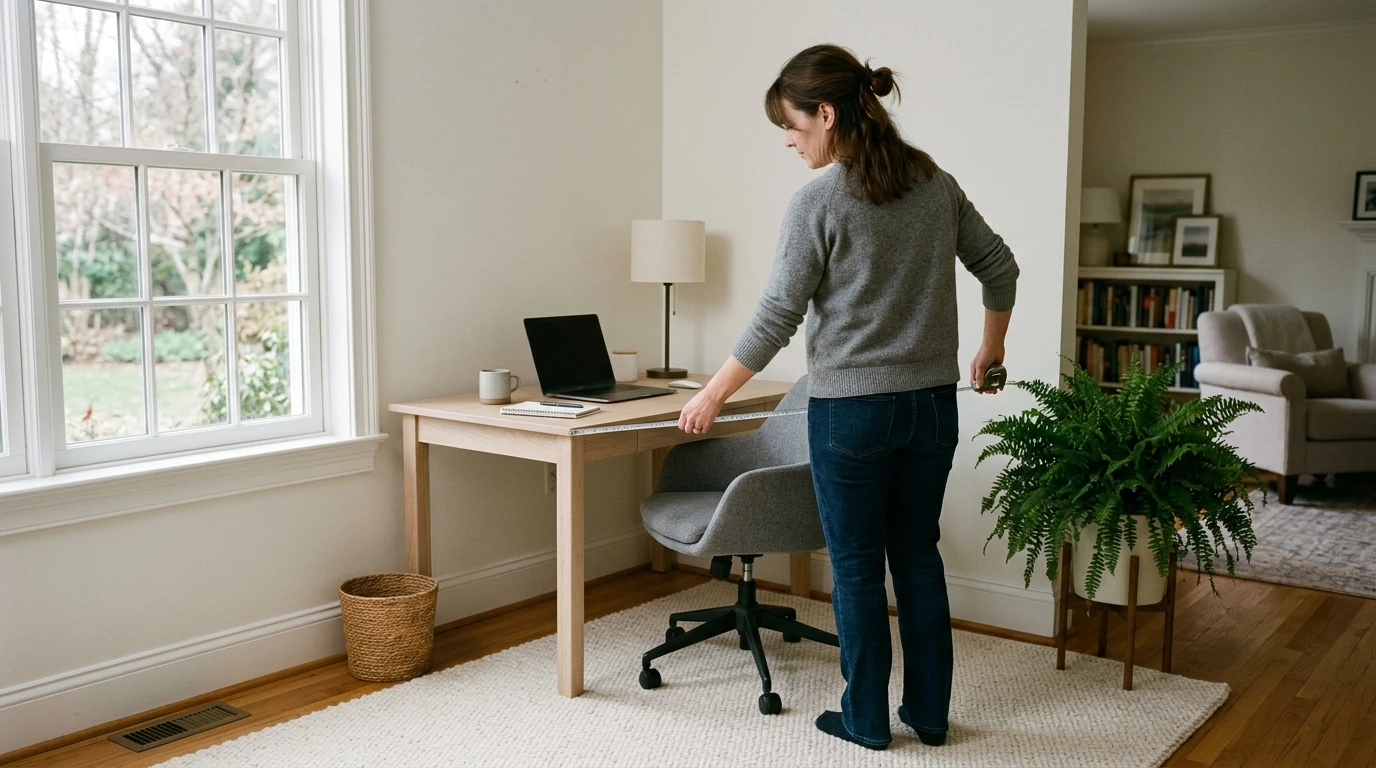
Regular use requires ongoing business use rather than occasional or incidental work, and you should be able to support both your use of the space and its size. Keep a floor plan, measurements, receipts, and records of your business activities to help document your claim if questions arise.

Home Office Tax Deduction: Requirements and Rules

Featured in this guide

Your Ultimate Home Office Guide | Digital Download | How to Organize a Home Office for Productivity, Focus & Style | Printable eBook & Workspace Setup Planner

View product

How do you calculate the deduction?

With the actual-expense method, you calculate the business share of eligible home expenses, generally using the percentage of your home devoted to the office, and separately account for expenses that apply only to that space.

Eligible expenses can include a business portion of rent, utilities, insurance, repairs, and, for homeowners, certain mortgage interest, real estate taxes, and depreciation; deduction limits and depreciation rules can affect the result. As you plan your workspace, our home office setup guide and our featured digital download, Your Ultimate Home Office Guide, can help you think through your space, while our team recommends consulting a tax professional about your circumstances.

Check the product’s listed specifications when evaluating how do you calculate the deduction.

FAQ

What are the requirements to qualify for the home office tax deduction?

You generally must use a defined part of your home regularly and exclusively for business and meet an applicable business-use test, such as using it as your principal place of business. Exceptions to exclusive use exist for qualifying daycare and certain inventory storage, and most employees cannot take the federal deduction.

What can be claimed for a home office?

Depending on the calculation method you choose, you may claim a set amount based on qualifying square footage or eligible actual expenses attributable to the office. Actual expenses may include part of your rent, utilities, insurance, repairs, and certain homeowner costs, subject to IRS rules and limits.

See if Your Ultimate Home Office Guide | Digital Download | How to Organize a Home Office for Productivity, Focus & Style | Printable eBook & Workspace Setup Planner fits your setup

View product

Was this article helpful?

Yes No
Leave a comment
Top

Shopping cart

×